
A Water Slide is more than a colorful feature in a resort brochure. It is a major investment involving design, fabrication, shipping, installation, and long-term maintenance. Grand View Research estimated the global water park market at about US$4.6 billion in 2023, with continued growth projected through 2030. The estimate signals opportunity, but it does not guarantee that every project will succeed. Site conditions, visitor capacity, and operating costs still matter.
Attendance data also helps explain why buyers compare suppliers carefully. The TEA/AECOM 2023 Theme Index tracks attendance at leading theme and water parks, offering useful context on the attractions competing for visitors. Yet attendance alone cannot tell buyers whether a slide will fit a specific site. A steep drop may look impressive in a rendering. The real test is how its dimensions, water flow, materials, and maintenance needs suit the operator’s plans.
This guide introduces seven Water Slide suppliers for global buyers in 2026. It focuses on practical selection points: project experience, engineering support, customization, production quality, delivery coordination, and after-sales service. Buyers should request project references and clear technical documentation, then confirm how each supplier handles installation support and spare parts. Small details count. A supplier may offer a striking design but leave unanswered questions about maintenance access or delivery timing. That is worth questioning. The comparison is a starting point, not a substitute for reviewing project-specific requirements with qualified professionals.
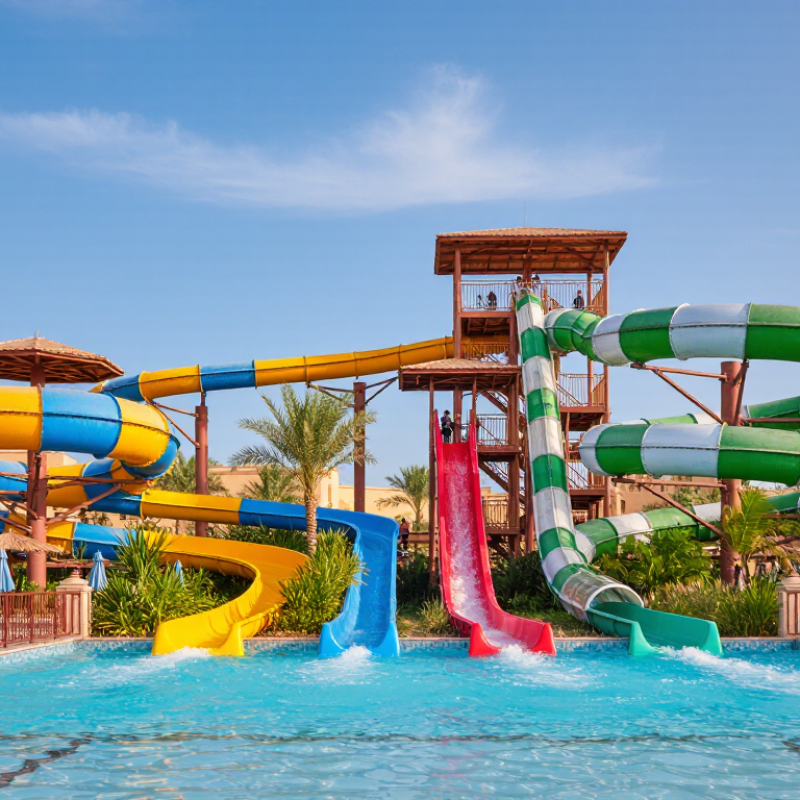
Water-slide suppliers do more than deliver flumes. They typically provide concept design, hydraulic calculations, structural drawings, ride components, installation guidance, and maintenance documents. A project may include fiberglass flumes, steel supports, pumps, launch platforms, and landing pools. Each part must fit the site’s terrain, water supply, and expected visitor flow.
The ASTM F2376-17(2022) standard covers water-slide system design, manufacture, construction, and operation. Buyers can use it as a technical reference when reviewing supplier proposals, alongside site-specific engineering and inspection needs. That matters. The supplier’s role often continues after delivery, with operator training, spare parts, and troubleshooting support. The TEA Global Experience Index 2023 reported about 31 million visits across the world’s 20 busiest water parks. That figure signals demand at major parks, but it does not predict attendance at every new project. A supplier’s schedule, testing plan, and after-sales support deserve close review. Look beyond the renderings. A polished design can still meet a difficult site condition, and project assumptions sometimes need revisiting.
In 2026, evaluate a water slide supplier by its engineering evidence, not its renderings. Ask for signed hydraulic calculations, structural drawings, flow-rate requirements, and clear installation tolerances. ASTM International’s F2376 standard offers a useful technical reference for water slide systems; confirm how it applies alongside requirements in the destination country. Details matter: a poorly positioned support can complicate assembly and inspection.
Demand affects design choices. The TEA/AECOM 2023 Theme Index reported 31.7 million visits across the world’s 20 most-attended water parks, up 23.1% from 2022. Ask suppliers how their proposed slide handles peak-hour dispatch, queue flow, and expected maintenance downtime. Look for documented material specifications, including resistance to UV exposure and treated water, plus a realistic replacement-parts plan. Small details count.
Compare warranties, commissioning support, and response times in writing. Request references for projects with similar climate, capacity, and operating hours. A long warranty is not enough if replacement parts take months to arrive. Review the maintenance schedule with the people who will actually run the ride; they may spot gaps that a polished proposal misses. No checklist is perfect. Before signing, verify the drawings, exclusions, and service commitments with an independent engineer.
How to use this chart: These percentages are a suggested buyer evaluation framework, not survey results or measured supplier rankings. Adjust the weights to fit your project, then score each supplier against the same criteria.
Selecting among seven leading water slide suppliers calls for more than comparing catalog photos. Global buyers should examine design experience, material specifications, production quality controls, and the support available after installation. Some suppliers focus on custom, site-specific attractions; others offer modular slides or inflatable products for different venue sizes. The right fit depends on visitor capacity, climate, available space, and maintenance resources. Small details matter. Ask how surface finishes handle frequent use, and how replacement parts are sourced.
Before requesting a quotation, share a basic site plan and expected operating conditions. Then compare each supplier’s drawings, lead times, packing methods, and installation guidance. Request relevant inspection records and clear documentation for materials and structural components. A polished rendering is not proof of build quality. It is only a starting point. Buyers should also clarify who handles commissioning, staff training, and warranty claims across borders. One detail is easy to overlook: local teams may need instructions in a practical format, not just a thick manual. Even careful comparisons can miss something, so keep questions in writing and confirm changes before production begins.
For global buyers, the best water slide supplier is not simply the one with the largest catalog. Compare engineering support, material specifications, production capacity, delivery planning, and after-sales service. Grand View Research estimated the global water park market at USD 4.6 billion in 2022, with projected growth through 2030. That expansion makes supplier capacity worth checking, not assuming. Ask for project references, documented quality controls, and realistic lead times.
Product comparisons should include slide type, rider capacity, footprint, water requirements, and access for maintenance. A compact body slide may suit a tight site, while a large raft ride needs more space and careful logistics. Request drawings, installation guidance, spare-part availability, and clear warranty terms. ASTM F2376 provides a relevant design and operation standard for water slide systems; buyers can ask suppliers how their documentation addresses applicable standards. Details matter. A polished rendering cannot show how quickly a replacement part will arrive. That comparison is not always tidy, either: supplier experience may be strong, but service coverage in the destination country may be limited. Check it directly.
Choosing a water slide supplier starts with the project, not the catalog. Define the rider age range, expected throughput, site footprint, climate, water supply, and maintenance capacity. Ask for dimensioned drawings, flow-rate requirements, anchoring details, and a clear list of exclusions. A glossy rendering is not engineering evidence. Request details of comparable installations and contactable operators. Ask how each slide performs after several seasons, not only on opening day.
Verify documents against the exact model and materials being quoted. Check test reports, material specifications, quality-control procedures, and inspection records. Confirm the issuing body directly where practical. Requirements vary by location, so have a qualified local engineer review structural loads, foundations, drainage, barriers, and operating procedures. Small mismatches matter. A certificate for another model, or an outdated report, does not prove this design is suitable. Ask who supervises installation, what training is included, and how replacement parts are supplied.
Compare total project cost, not just equipment price: include freight, installation, commissioning, spare parts, and planned downtime. Put delivery milestones, acceptance criteria, warranty limits, and response times in writing. Then ask one detailed technical question and assess how clearly the supplier responds. No checklist catches everything. Even a capable team may be slow to document small changes. Treat that as a risk to resolve before paying a deposit, with revised drawings and written confirmation.
Use this comparison checklist to evaluate suppliers. It describes verifiable selection criteria, not a ranking or claims about specific companies.
| Evaluation Area | What to Look For | Evidence to Verify | Why It Matters |
|---|---|---|---|
| 1. Safety standards and engineering | Design documentation that identifies applicable local regulations and relevant water-slide standards, such as EN 1069 or ASTM F2374, where applicable. | Request the design basis, calculations, drawings, inspection records, and the exact standard editions used. Confirm requirements with the local authority having jurisdiction. | Standards and approval requirements vary by market and project; a standards reference alone is not proof of compliance. |
| 2. Structural and material quality | Specified materials, documented structural design, and fabrication controls suitable for the installation environment and expected use. | Check material specifications, certificates where relevant, laminate or weld procedures, inspection plans, and project-specific structural calculations. | Material selection and fabrication quality affect durability, maintenance needs, and safe operation. |
| 3. Water-flow and pump design | Hydraulic design matched to the slide configuration, operating conditions, and available site utilities. | Request flow-rate and head requirements, pump and piping schedules, control details, and commissioning or operating instructions. | Incorrect assumptions about flow, pressure, or utilities can affect ride operation and project costs. |
| 4. Manufacturing quality system | Documented production inspections and traceable quality controls throughout fabrication and assembly. | Review the quality plan, inspection and test records, corrective-action process, and any quality-management certificate. Verify a certificate’s issuer, validity, and scope. | A certificate such as ISO 9001 relates to a defined management-system scope; it does not by itself certify a particular slide or project. |
| 5. Installation and site coordination | Clear interface requirements for foundations, access, utilities, drainage, installation, and commissioning. | Ask for a responsibility matrix, site-readiness checklist, installation method, lifting requirements, and commissioning scope. | Early coordination helps identify scope gaps between the supplier, designer, contractor, and owner. |
| 6. Maintenance, training, and spare parts | Operating and maintenance documentation, operator training, and a defined process for obtaining replacement parts. | Review manuals, recommended inspection schedules, training deliverables, warranty terms, and spare-parts ordering information. | Lifecycle support affects the owner’s ability to maintain equipment and plan for downtime. |
| 7. Export, contract, and reference checks | A clear project scope, delivery plan, payment milestones, warranty conditions, and experience relevant to the project’s market and scale. | Check the legal contracting entity, shipment and installation responsibilities, references with permission, and any required import or local approvals. | Written responsibilities and independently checked references reduce avoidable commercial and delivery risks. |
Services may include concept design, hydraulic calculations, structural drawings, ride components, and installation guidance. Some suppliers also provide operator training, spare parts, and troubleshooting support.
A project may include fiberglass flumes, steel supports, pumps, launch platforms, and landing pools. Each part must suit the site’s terrain, water supply, and visitor flow.
Compare engineering support, material specifications, production capacity, delivery plans, and after-sales service. Ask for project references, quality-control records, and realistic lead times. Catalog size alone proves little.
Review slide type, rider capacity, footprint, water requirements, and maintenance access. A compact body slide may fit a tight site; a raft ride may need more space. Logistics can get complicated.
Match test reports, material specifications, and inspection records to the exact model being quoted. Confirm the issuing organization where practical. A report for another model is not enough.
Local requirements vary. A qualified engineer can review structural loads, foundations, drainage, barriers, and operating procedures. Small mismatches matter, especially around foundations and water flow.
Ask who supervises installation, what training is included, and how replacement parts are supplied. Check service coverage in the destination country. It may be limited.
Include freight, installation, commissioning, spare parts, and planned downtime—not only equipment prices. Put delivery milestones, acceptance criteria, warranty limits, and response times in writing. Then review them again.
This guide explores how Water Slide suppliers support projects, from design and manufacturing to installation guidance, customization, and after-sales service. It explains how the industry connects buyers with manufacturers and project partners, then outlines practical criteria for evaluating suppliers in 2026, including product range, materials, production capacity, quality controls, communication, and delivery support.
The article also reviews seven leading supplier options for global buyers and compares their capabilities, products, and services to help readers understand which may suit different project needs. It concludes with a clear selection and verification process: define project requirements, compare proposals, request relevant documentation and references, assess production and service capabilities, and confirm that expectations are aligned before making a commitment.
