
Best Water House Manufacturers in China for Global Buyers

Time:2026-11-20 Author:Ethan
0%

Choosing a Water House manufacturer in China requires more than comparing glossy renders and quoted prices. Global buyers need evidence of structural quality, marine-grade materials, insulation, drainage, and reliable after-sales support. Details matter: ask how steel joints are protected from corrosion, how windows seal against driving rain, and what testing supports the stated wind and load ratings. A polished brochure is not proof.

Architect Koen Olthuis, founder of Waterstudio.NL, has advanced a useful idea: “Design for water, not against it.” For buyers, that means assessing how a home responds to its actual site, changing water levels, humidity, and maintenance access—not just how it looks in a showroom. Request project references, factory inspection records, drawings, and a clear bill of materials. Check whether the quoted scope includes transport, installation guidance, and commissioning. These items can shift the real cost substantially.

This guide compares Chinese manufacturers through practical criteria, including product range, customization, quality controls, and export experience. It also considers communication and documentation, where small gaps can become expensive delays. No supplier is perfect. A strong candidate should explain limitations plainly and provide verifiable answers. Treat broad claims with care, especially when testing details or warranty terms remain vague. The right Water House partner is not simply the lowest bidder; it is the manufacturer whose evidence, process, and support fit your project’s conditions.
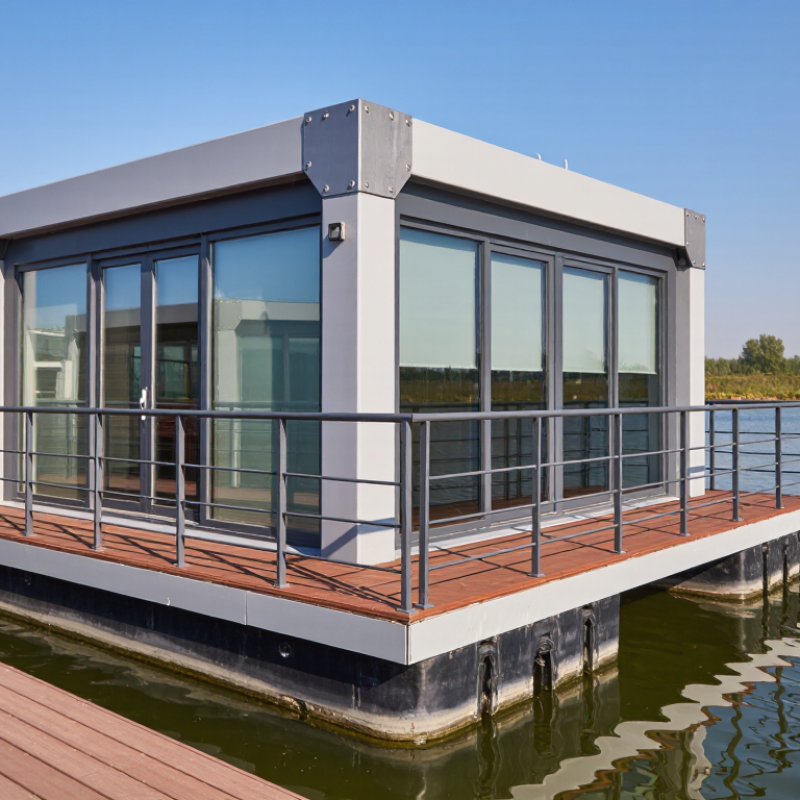
Best Water House Manufacturers in China for Global Buyers

Market Context: WHO/UNICEF Report 2.2 Billion Lacked Safe Water in 2022

In 2022, an estimated 2.2 billion people lacked safely managed drinking water services, according to WHO and UNICEF’s Joint Monitoring Programme. “Safely managed” means water comes from an improved source, is available when needed, and is free from contamination. This figure describes a service gap, not simply a shortage of water. The gap is vast.

For global buyers, this context makes product performance more than a catalog claim. Chinese manufacturers may supply storage tanks, treatment units, pumps, or complete water systems. Suitability depends on local source water, climate, power reliability, and maintenance skills. Ask for material specifications, independent test reports, operating limits, spare-parts plans, and clear installation guidance. Check that any stated certification applies to the destination market and exact model. A polished brochure cannot show performance after months of heat, sediment, or inconsistent electricity. Small details matter. One design will not fit every community; that assumption deserves scrutiny.

Tips: Request a sample or pilot where practical. Test source and treated water using an appropriate laboratory method, and compare results with local drinking-water requirements. Consider lifetime costs, not just purchase price. Keep evaluation records to help identify gaps before placing a large order.

Water-House Types: Compare RO, UF, Containerized, and Storage-Tank Systems

Water-house options solve different problems, so global buyers should compare function before price. Reverse osmosis (RO) removes dissolved salts and many small contaminants, making it useful for brackish or saline sources. It needs pretreatment, steady pressure, and a plan for concentrate discharge. Expect higher energy use than with ultrafiltration. UF membranes retain suspended particles and many microorganisms, but usually leave dissolved salts in the water. Check source-water reports before choosing either process. Guessing is costly.

Containerized systems describe a delivery format, not a treatment method. A container may house RO, UF, pumps, controls, or several treatment stages. Ask for internal layout drawings, access clearances, insulation details, and a realistic commissioning plan. A tidy exterior can hide difficult maintenance access. That matters.

Storage tanks balance supply and demand; they do not make water safe by themselves. Buyers should confirm tank material, usable volume, vent and drain design, and compatibility with the treated water. A tank sized only for average daily use may struggle during peak demand or service interruptions. Compare suppliers using the same raw-water data and required output quality. Review performance test records, membrane replacement access, spare-parts availability, and operator training. No configuration is perfect; even a well-specified system can disappoint when feed-water conditions change.

Quality Benchmarks: Check ISO 9001 and NSF/ANSI/CAN 61 Certifications

For global buyers comparing water-house manufacturers in China, certifications are useful starting points, not shortcuts. ISO 9001 covers a manufacturer’s quality-management system, including controlled processes and corrective actions. It does not certify a particular filter, valve, or tank as safe for drinking water. Check the certificate’s scope, issuing body, validity dates, and manufacturing site. Small details matter.

For wetted components, NSF/ANSI/CAN 61 evaluates health effects, including contaminants that may leach into drinking water. Ask for the current certificate and verify that the exact model, material, and production location are covered. A certificate for one resin or fitting may not cover a complete assembly. Compare it with the product label and technical data sheet. A polished PDF can still hide a mismatch.

The WHO and UNICEF Joint Monitoring Programme reported that 2.2 billion people lacked safely managed drinking water in 2022, in its 2023 household water report. That figure underlines why material and process checks deserve care. Request recent batch records, traceability details, and test reports alongside certificates. Look closely at seals, wetted surfaces, and component substitutions. Paperwork is only one layer of assurance. Independent testing and clear answers from the factory matter, too.

China Manufacturer Comparison: Assess Capacity, Materials, Warranty, and Export Record

A useful comparison starts with verified production capacity, not a polished catalogue. Ask how many water storage units the factory can complete monthly, and whether that figure includes testing and packing. Request recent production records or a live video walkthrough. A stated capacity of 5,000 liters means little if the outlet, cover, or frame is not built for the intended use. Small details matter.

Material choice affects service life. Compare the specified resin or steel grade, wall thickness, UV protection, and corrosion resistance against your site conditions. Ask for material data sheets and inspection reports tied to the quoted model. If a supplier cannot explain how a tank handles sunlight or temperature changes, pause. A document alone is not proof, but it gives you concrete questions to ask.

Read warranty terms closely: check the covered parts, claim process, and who pays for replacement shipping. Request examples of export shipments to your destination region, with references or redacted shipping records where available. Also confirm packing methods, spare-part availability, and typical lead times. A manufacturer may have export experience yet still be unfamiliar with your port or handling needs. I would compare actual evidence side by side; honestly, a tidy spreadsheet can still miss problems that only appear after installation.

Best Water House Manufacturers in China for Global Buyers

A practical comparison framework for assessing supplier capacity, materials, warranty, and export record.

Suggested buyer-defined scoring weights, totaling 100 points—not company ratings or independently verified industry statistics. Verify production capacity, material certifications, written warranty terms, and export references during due diligence.

Global-Buyer Due Diligence: Verify Local Power, Water-Quality, and Compliance Requirements

Best Water House Manufacturers in China for Global Buyers

Before choosing a manufacturer, confirm the destination site’s electrical supply. Voltage, frequency, phase, plug type, and grounding can differ between regions and buildings. Ask for the equipment’s rated load and startup current, then compare them with the site’s available capacity. A unit that runs well in a factory may trip a smaller local circuit. Check the actual site. Also confirm inlet pressure, drainage, and space for filter changes; a tight utility room can make routine servicing awkward.

Water quality needs the same attention. Share a recent laboratory report for the source water, including hardness, turbidity, and relevant contaminants. Ask the manufacturer to explain how the proposed treatment responds to those results, and request test data for the finished water. Generic performance claims are not a substitute for testing with comparable water. A polished brochure is not proof. Verify which product documents, electrical approvals, labeling, and water-contact material requirements apply in the destination market with qualified local professionals or authorities. Request document samples before production, and make sure the delivered configuration matches them. Checklists help, but they can miss details; record open questions and resolve them before payment or shipment.

Best Water House Manufacturers in China for Global Buyers - Global-Buyer Due Diligence: Verify Local Power, Water-Quality, and Compliance Requirements
Destination Market Typical Single-Phase Supply Water-Quality Checks Before Equipment Selection Relevant Compliance Considerations Evidence to Request from the Manufacturer
United States Commonly 120 V / 60 Hz; some equipment or sites require 240 V / 60 Hz. Confirm the site circuit, plug, and phase. Obtain a recent source-water analysis, including TDS, hardness, pH, turbidity, iron, manganese, free chlorine, and microbiological indicators where relevant. Compare results with the equipment’s stated feed-water limits. Check applicable state and local plumbing and electrical codes. NSF/ANSI standards such as 42, 53, and 58 may be relevant to specific filtration or reverse-osmosis claims; certification requirements depend on the product, claims, and jurisdiction. Electrical nameplate and wiring diagram; feed-water specification; product performance test reports; certificates with model numbers and scope; installation and maintenance instructions.
European Union Typically 230 V / 50 Hz for single-phase supply. Confirm local installation conditions and whether the equipment requires a different phase or circuit. Test the actual source water and identify the intended use. Check parameters that affect treatment design and performance, particularly hardness, salinity/TDS, turbidity, iron, manganese, pH, and disinfectant residual. The EU Drinking Water Directive (Directive (EU) 2020/2184) establishes requirements for water intended for human consumption; national implementation and product-specific rules should be checked. Electrical, electromagnetic compatibility, and machinery obligations depend on the equipment’s design and intended use. EU Declaration of Conformity where applicable; technical documentation and test reports; material declarations for water-contact parts; model-specific performance data; instructions and labels suitable for the destination market.
United Kingdom Typically 230 V / 50 Hz for single-phase supply. Verify the site supply and the equipment’s rated voltage, current, and plug or hard-wiring requirements. Use a laboratory report for the actual feed water. Confirm the manufacturer’s permitted ranges for hardness, TDS, turbidity, pH, iron, manganese, and disinfectant residual before specifying pretreatment. Check the applicable national rules and local requirements. In England and Wales, the Water Supply (Water Fittings) Regulations 1999 cover water fittings and systems; separate arrangements apply in Scotland and Northern Ireland. Product conformity marking requirements depend on the product and current rules. Water-contact material information; evidence for any claimed approvals; electrical and product conformity documents applicable to the market; installation drawings; service and replacement-part schedule.
Australia and New Zealand Typically 230 V / 50 Hz single-phase. Confirm the site connection and check whether the unit needs a dedicated circuit or a three-phase supply. Have the source water analysed and compare it with the equipment’s feed-water limits. Pay particular attention to salinity/TDS, hardness, turbidity, iron, manganese, pH, and disinfectant residual. Check local plumbing requirements and the Plumbing Code of Australia. WaterMark certification applies to certain plumbing and drainage products where required by the code. AS/NZS 4020 is a test standard for products in contact with drinking water; applicability depends on the product and intended use. WaterMark evidence where applicable; AS/NZS 4020 test evidence for relevant water-contact components; electrical ratings; performance and capacity data; local installation and maintenance instructions.
Japan 100 V / 50 or 60 Hz is common for single-phase supply; frequency varies by region. Some sites use 200 V equipment. Confirm both voltage and local frequency before ordering. Test the supply water and check the equipment’s limits for hardness, TDS, turbidity, pH, iron, manganese, and disinfectant residual. Confirm whether the system is intended for municipal water, well water, or another source. Check applicable Japanese water-supply, electrical, and product requirements for the equipment type and intended use. Do not assume that documentation or approvals for another market satisfy Japanese requirements. Voltage- and frequency-specific nameplate; Japanese-language instructions and labels where required; applicable conformity documents; water-contact material details; service and consumables information.

Due-diligence note: Voltage figures are common nominal supplies, not a substitute for checking the installation site. Drinking-water limits, approval pathways, and certification obligations vary by country, product type, intended use, and local authority. Require model-specific documents and independently verify certificates with the issuing organization before purchase.

FAQS

How do reverse osmosis and ultrafiltration differ?

Reverse osmosis removes dissolved salts and many small contaminants. Ultrafiltration captures suspended particles and many microorganisms, but usually leaves dissolved salts. Check a source-water report before choosing.

What does a reverse osmosis system need?

It needs pretreatment and steady pressure. Plan for concentrate discharge and higher energy use than ultrafiltration. Guessing is costly.

Does a containerized system describe a treatment method?

No. It describes the delivery format. A container may house pumps, controls, reverse osmosis, ultrafiltration, or several treatment stages. Check access clearances and internal layout drawings.

Can a storage tank make water safe?

No. A tank stores water; it does not treat it. Confirm the material, usable volume, vent, drain, and compatibility with treated water.

How should buyers estimate tank capacity?

Compare peak demand, daily use, and possible service interruptions. A tank sized only for average daily demand may fall short. That matters.

What evidence should buyers request from a manufacturer?

Ask for recent production records or a live factory walkthrough. Confirm that stated capacity includes testing and packing. A polished catalogue is not enough.

Which material details are important for a storage tank?

Check the resin or steel grade, wall thickness, UV protection, and corrosion resistance. Request data sheets and inspection reports for the quoted model. Documents help, but they are not proof.

What should buyers check in warranties and export experience?

Review covered parts, claim steps, and replacement shipping costs. Ask about packing, spare parts, lead times, and shipments to your region. A spreadsheet can still miss installation problems. I might overlook something, too.

Conclusion

Choosing a Water House manufacturer in China begins with understanding the need: in 2022, an estimated 2.2 billion people lacked safely managed drinking water, highlighting the value of dependable treatment and storage systems. Buyers can compare reverse osmosis (RO) units for broad contaminant reduction, ultrafiltration (UF) systems for particle and microorganism removal, containerized plants for transportable treatment, and storage tanks for reliable supply between treatment and use. The right option depends on source-water conditions, required output, site constraints, and operating needs.

Before placing an order, assess each manufacturer’s production capacity, construction materials, warranty terms, and experience exporting to markets similar to yours. Check relevant quality documentation, including ISO 9001 and NSF/ANSI/CAN 61 where applicable, and confirm that claims match the specific equipment being offered. Global buyers should also verify local electrical power requirements, test water quality, and review applicable installation, product, and water-safety requirements. Clear technical specifications, documentation, and after-sales support can help reduce sourcing risks and ensure the system is suitable for its intended location.

Ethan

Ethan

Ethan is a seasoned marketing professional with a deep expertise in our company's innovative product line. With a passion for sharing knowledge and insights, he takes the lead in regularly updating our corporate blog, where he explores industry trends, product features, and effective marketing......