
Factory-Direct High-Quality Commercial Equipment Solutions
Explore our top-tier commercial water houses, outdoor slides, and interactive play structures engineered for maximum durability, absolute safety, and optimized project ROI.
Deconstructing the "Cheap vs. High Quality" Paradox in Indoor Playground Manufacturing
In commercial real estate development, hospitality planning, and family entertainment center (FEC) asset management, the procurement phrase "cheap high quality indoor playground manufacturer" is often misinterpreted as a contradiction in terms. However, advanced manufacturing engineering proves otherwise.
Economic Efficiency via Scale & Engineering
Achieving true low-cost, high-value indoor playground infrastructure relies on industrial efficiency, vertical integration, and structural modularity—not raw material compromise. Leading manufacturers achieve competitive price points through automated rotational molding (LLDPE), zero-waste CNC steel cutting, and standardized structural connection nodes that reduce factory overhead by up to 32% while preserving structural durability.
Total Cost of Ownership (TCO) Shift
Substandard equipment yields catastrophic operational costs due to rapid surface degradation, structural fatigue, and regulatory failure during local safety inspections (ASTM F1918 / EN 1176). A mathematically optimized procurement model balances direct capital expenditure (CAPEX) with zero-maintenance material engineering, ensuring an asset operational lifespan exceeding 10–15 years with minimal annual OPEX.
Global Corporate Procurement Demands & Material Engineering Criteria
Institutional buyers, municipal contractors, commercial plaza owners, and resort developers require rigorous mechanical, chemical, and fire safety specifications before signing factory purchase contracts.
1. Rotomolded LLDPE Plastics
We utilize food-grade, virgin Linear Low-Density Polyethylene (LLDPE) sourced from global polymer chemical suppliers. Featuring built-in UV-8 stabilizers and non-toxic color pigments, our molded plastic components withstand extreme impacts, prevent static build-up, and remain color-fast under intensive indoor lighting or outdoor exposure.
2. Structural Galvanized Steel Framing
The structural skeleton is composed of hot-dip galvanized steel pipes with a minimum wall thickness of 2.2mm to 2.75mm. Internal and external anti-corrosion coating guarantees structural integrity under continuous load stress, passing strict load-capacity tests exceeding 300kg/m² across multi-tier play structures.
3. High-Density EVA & Soft PVC Wrapping
Impact points, climbing platforms, and walkways feature 100mm high-density EVA foam inner padding wrapped in heavy-duty 0.55mm PVC vinyl leather. Fire-retardant (BS 5852 / NFPA 701 compliant), phthalate-free, and easy to sanitize, this soft containment system eliminates physical collision hazards.
| Material Engineering Domain | Standard Market Tier (Low Cost) | Factory Direct Premium Tier (Our Standard) | Safety & Compliance Value |
|---|---|---|---|
| Main Pipe Structure | 1.5mm Cold-Rolled Steel (Uncoated Internal) | 2.5mm+ Hot-Dip Galvanized Structural Steel | Prevents structural fatigue, rust & collapse risk. |
| Plastic Components | Recycled PE Blends (Brittle over time) | 100% Virgin LLDPE with UV-8 Pigment Matrix | Impact resistant up to 1000kg force; anti-cracking. |
| Soft Padding & Decking | Standard Polyurethane Foam / Low-density PVC | High-Density EVA Foam + 0.55mm Commercial PVC | Fire-retardant (Class B1), non-toxic, anti-bacterial. |
| Safety Netting | Polyester Knit Netting (<100kg tensile strength) | High-Tensile Nylon Cord Knotted Netting (300kg+) | Prevents child fall-through and finger entrapment. |
Macro Industry Solutions: From 3D Spatial CAD Design to Global On-Site Commissioning
As a leading cheap high quality indoor playground manufacturer and OEM factory network, we deliver complete end-to-end industrial workflows tailored for global commercial clients.
Phase 1: Spatial CAD & BIM Integration
Our structural design team evaluates architectural floor plans, ceiling clearance heights, pillar obstacles, and emergency exit routes. We provide custom 3D CAD renders and BIM models within 48–72 hours, optimizing player capacity density while ensuring 100% compliance with local building codes.
Phase 2: Modular Factory Fabrication
Utilizing automated CNC laser cutters, robotic welding bays, and large-scale rotomolding ovens, components are engineered with sub-millimeter precision. Pre-assembly stress testing takes place at our manufacturing hub to eliminate alignment errors prior to container packing.
Phase 3: Global Logistics & Installation
We handle seaworthy export packaging, custom clearance documentation, and direct ocean freight. Experienced installation engineers and project supervisors are dispatched worldwide to conduct rapid on-site assembly, load verification, and safety sign-off.
Localized Support, Risk Mitigation & Safety Certification Matrix
Navigating regional safety legislation is a core requirement when importing playground equipment from overseas factories. Our production processes adhere directly to the most stringent international standards.
North American & European Standards (ASTM F1918 / EN 1176)
Every playground layout engineered by our factory undergo strict head and neck entrapment probes, finger entrapment checks, and fall zone buffer calculations. Structural load points are calculated to survive heavy foot traffic from both children and supervising adults.
- ASTM F1918-21: Soft Contained Play Equipment Safety Standard
- EN 1176-1 / EN 1176-10: European Playground Equipment & Fully Enclosed Play Criteria
- CE & TÜV Rheinland: Certified Manufacturing Quality Management Systems
Fire Safety & Environmental Non-Toxicity
Indoor commercial environments face stringent municipal fire codes and chemical safety laws. All foam components, PVC membranes, plastic resins, and floor mats pass flame propagation and chemical migration audits.
- NFPA 286 / BS 5852: Flame retardant soft padding
- REACH & RoHS: Phthalate-free, heavy-metal-free, and odorless polymers
- ISO 9001 / ISO 14001: Eco-friendly manufacturing and strict Quality Assurance
Technology Roadmap: Next-Generation Smart & Sustainable Indoor Play Spaces
The global amusement market is rapidly evolving beyond passive soft-play obstacles. Our factory R&D department is pioneering several technology integrations designed to boost visitor retention and operational control.
Interactive Smart Projection & Sensors
Integrating gamified LED pressure-sensitive floor tiles, interactive ball pit wall projections, and digital scoreboards. These dynamic elements transform physical exercises into immersive digital games, dramatically extending average guest stay times.
Sustainable Circular Polymers
Transitioning toward bio-based PE polymers and closed-loop circular recycling for play structures. Our zero-waste manufacturing initiative ensures discarded plastic components can be re-granulated and reused without degradation in mechanical strength.
Sensory-Inclusive Design Paradigms
Pioneering sensory-friendly play zones engineered specifically for neurodivergent children and kids with sensory processing needs. Combining tactile soft walls, quiet decompression nooks, and low-frequency auditory play modules.
Advanced Technical & Aquatic Playground Equipment Catalog
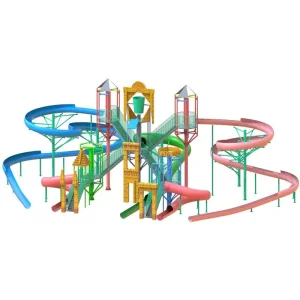
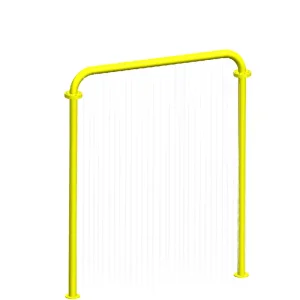
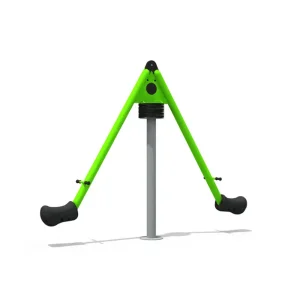
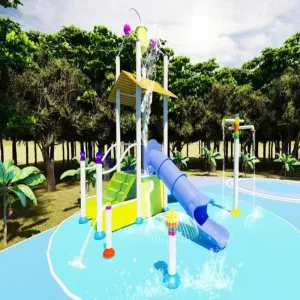
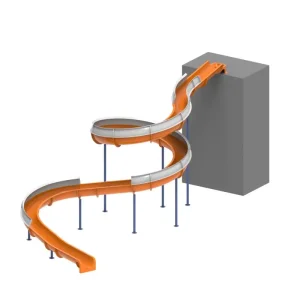
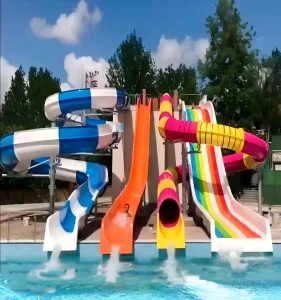
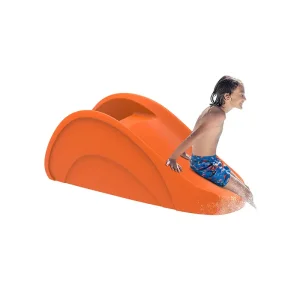
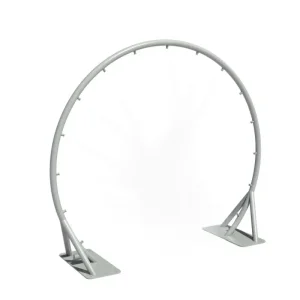
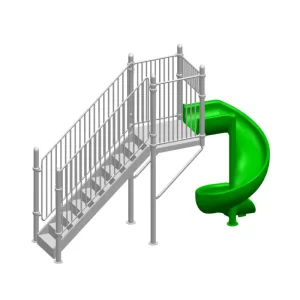
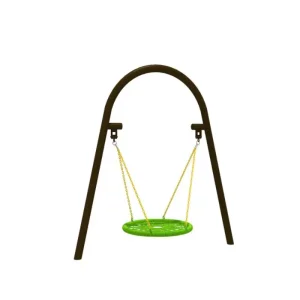
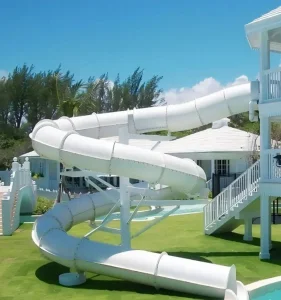
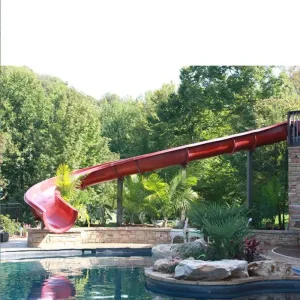
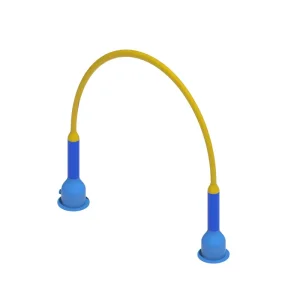
Select from our certified aquatic slides, stainless steel misting rings, custom swimming pool additions, and modular swing assemblies engineered for commercial resilience.
Frequently Asked Questions for Commercial Playground Buyers
In-depth technical and financial answers designed for B2B procurement managers, real estate developers, and franchise operators.