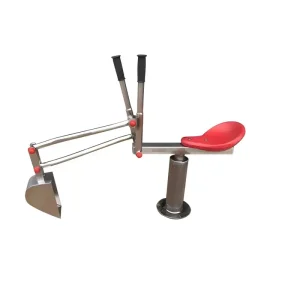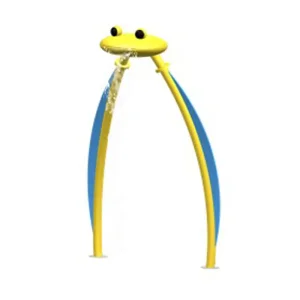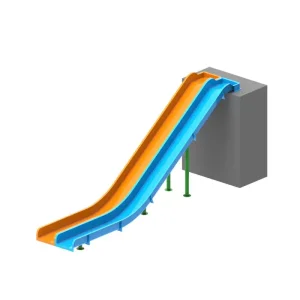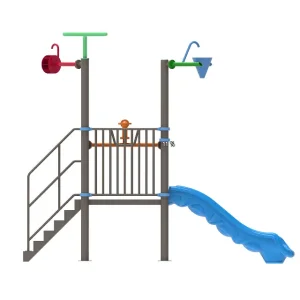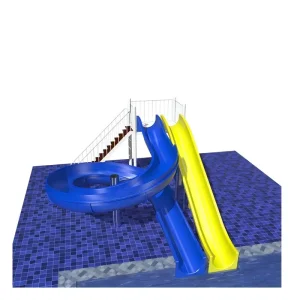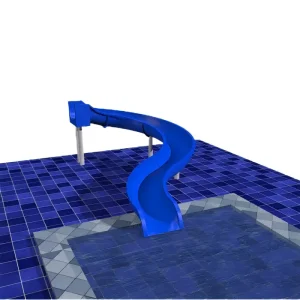
Featured Commercial Equipment Range
Explore our primary industrial aquatic hardware, water park slides, and specialized filtration components engineered for heavy-duty commercial environments.
Global Industry Ecosystem: OEM Duckweed Net Manufacturing
An authoritative analysis of high-density polyethylene (HDPE) mesh engineering, bio-harvesting infrastructure, and commercial water surface management solutions for global B2B procurement partners.
Industrial Aquaculture Integration
Duckweed (family Lemnaceae) has evolved from a nuisance aquatic weed into a critical bio-resource for sustainable protein production, bio-energy feedstock, and wastewater bioremediation. OEM duckweed nets serve as the front-line mechanical harvesting interface, requiring micro-mesh tolerances that allow water discharge while trapping biomass with zero yield loss.
Material Science Breakthroughs
Modern factories utilize ultra-high-molecular-weight monofilaments integrated with Hindered Amine Light Stabilizers (HALS). This prevents photo-oxidation degradation under intense solar radiation, ensuring structural tensile integrity in hyper-saline or highly chlorinated agricultural runoff environments.
Custom Manufacturing Precision
Original Equipment Manufacturers (OEM) provide custom mesh sizing ranging from 200 microns to 2 millimeters, customized hem reinforce-stitching, anti-corrosion grommets, and floating frame integrations tailored to automated skimmers, manual drag nets, and industrial conveyor systems.
Technical Insight: Duckweed doubles its biomass every 16 to 48 hours under optimal conditions. Utilizing specialized, high-flow OEM netting prevents mesh clogging (bio-fouling), maximizing harvest rates by up to 40% compared to generic agricultural netting.
Engineering Specifications & Factory Standards
Rigorous OEM/ODM manufacturing criteria ensure continuous performance under severe outdoor environments.
Polymer Composition
Constructed from High-Density Polyethylene (HDPE) or Polypropylene (PP) with specialized UV stabilization matrix additives, resisting degradation from solar rays and chemicals.
- Density: 0.941–0.965 g/cm³
- Tensile Strength: ≥ 32 MPa
- Elongation at Break: 15% - 25%
- Melting Point: 130°C (266°F)
Mesh Geometry & Weave
Engineered using raschel warp knitting or mono-filament square weaves, preventing unraveling even when punctured during heavy mechanical operations.
- Aperture Size: 0.3mm to 3.0mm customizable
- Weave Type: Warp Knitted / Diamond Mesh
- Shade Factor: 10% - 35% customizable
- Hydrodynamic Drag: Optimized Low Resistance
Localized Application Scenarios & Macro Deployments
From commercial aquaculture farms in Southeast Asia to municipal water treatment facilities in North America, duckweed netting provides essential operational performance.
1. Commercial Bio-Aquaculture
Duckweed harvested via specialized nets is processed directly into high-protein feed for tilapia, carp, and poultry. OEM skimming nets mounted on catamarans enable continuous harvesting in large-scale aquaculture ponds.
2. Municipal Wastewater Remediation
Urban water authorities deploy duckweed to absorb excess nitrogen and phosphorus. Heavy-duty perimeter containment nets keep biomass localized for systematic extraction, preventing unwanted pump intake blockages.
3. Agricultural Runoff Retention Basins
Farmers install custom net barriers across drainage canals to filter and capture free-floating aquatic flora, turning potential environmental waste into natural green fertilizer compost.
Technology Roadmap & Future Industry Evolution
Key innovations driving the next generation of aquatic mesh manufacturing from 2025 to 2030.
Hydrophobic & Anti-Fouling Surfaces
Application of nano-scale fluoropolymer coatings to mesh fibers, reducing organic algae adhesion and extending operational cleaning cycles by 300%.
IoT Tensile Monitoring Nets
Integration of conductive micro-filaments capable of detecting mesh tears or structural overload in automated harvesting setups, relaying real-time telemetry to farm managers.
100% Circular Marine Synthetics
Transitioning from standard petrochemical HDPE to ocean-bound recycled plastics and bio-based polyethylene, reducing the carbon footprint of production to net zero.
End-to-End Factory OEM Solutions
How certified manufacturing facilities support global buyers from initial design to door-to-door delivery.
Custom Tooling & CAD Prototyping
Factory engineering teams work from client technical drawings to produce custom die-casts for netting frames, bespoke mesh tensioners, and custom edge reinforcement patterns within 7 to 14 days.
Automated High-Speed Warp Knitting
Utilizing high-speed Karl Mayer warp knitting machinery, partner factories deliver millions of square meters of uniform net mesh per month, keeping unit costs low while maintaining ISO quality standards.
Rigorous Quality Assurance
Every batch undergoes three-stage quality verification: tensile load testing, UV artificial weathering acceleration, and hydrodynamic flow dynamics verification prior to international shipment.
Frequently Asked Questions (FAQ)
Clear technical answers for industrial procurement managers and OEM clients.
What is the optimal mesh size for harvesting duckweed?
For most standard duckweed species (Lemna minor), a mesh opening between 0.5mm and 1.0mm is ideal. It allows high water throughput while trapping biomass efficiently. For smaller species like Wolffia, fine micro-mesh sizes around 0.2mm to 0.4mm are recommended.
How do OEM factories customize duckweed nets for automated machinery?
Factories customize nets by welding reinforced PVC edging, sewing industrial webbing borders, adding heavy-duty stainless steel grommets, or incorporating floating foam sleeves designed to mount directly onto automated conveyor skimmers.
What certifications should I look for in a OEM duckweed net manufacturer?
Reliable factories maintain ISO 9001 (Quality Management), ISO 14001 (Environmental Management), and supply UV resistance test reports (SGS or TUV certified) proving tensile retention after 3,000+ hours of accelerated QUV testing.
What is the typical production lead time for bulk OEM orders?
Standard sample prototyping takes 3 to 5 business days. Full container production runs (20ft/40ft containers) generally take 15 to 25 days depending on the customization complexity of frames and hems.
Additional Commercial Aquatic & Outdoor Play Equipment
Explore our broader catalog of water park structures, sandbox machinery, and custom aquatic play installations.