
Precision-Engineered Water Park Attractions
Direct factory manufacturing for high-capacity aquatic parks, luxury resorts, and municipal splash pads.

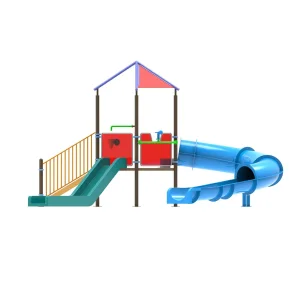
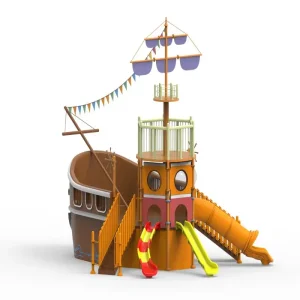
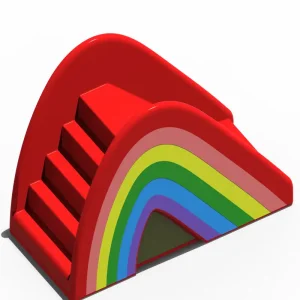
The Global Evolution of H2O Theme Parks: Modern Engineering & Design Shift
A technical overview of market dynamics, zero-depth trends, and eco-sustainable hydraulic designs.
The global commercial leisure industry is undergoing a paradigm shift. Standard static swimming pools are rapidly being phased out in favor of dynamic, multi-sensory H2O Theme Parks and interactive splash hubs. Municipal developers, luxury resort operators, and commercial entertainment groups are recognizing that immersive aquatic environments generate significantly higher guest retention, expand multi-generational family appeal, and dramatically boost direct per-capita revenue.
Key Industry Data: Modern interactive H2O theme parks record a 42% longer average visitor dwell time compared to traditional commercial swimming facilities, resulting in a direct 28% uptick in secondary food, beverage, and retail spend.
1. Transition to Zero-Depth & Inclusive Aquatic Infrastructure
Safety regulations and insurance compliance requirements worldwide have accelerated the adoption of zero-depth aquatic play zones (Splash Pads). By eliminating standing water, operators completely neutralize drowning risks, eliminating the necessity for multi-station lifeguard deployments while keeping regulatory friction minimal. Furthermore, inclusive design mandates (such as ADA in North America and EN 1176 in Europe) require universal play accessibility for children of all physical abilities.
2. Hydraulic Efficiency and Closed-Loop Smart Water Management
Water conservation is no longer an afterthought—it is a central financial and ecological imperative. State-of-the-art OEM manufacturers now integrate variable-frequency drive (VFD) smart pumps, real-time UV-C sterilizers, and automated filtration systems. Closed-loop recirculation systems ensure that up to 96% of active water volume is reclaimed, filtered, and continuously recirculated with near-zero chemical runoff.
Structural FRP Safety
Utilizing high-density Fiberglass Reinforced Plastics (FRP) with double-layer gel coats ensuring maximum structural shear strength, flame retardancy, and UV degradation resistance.
Eco Hydraulic Recirculation
Closed-loop, smart sensor-activated filtration systems designed to drastically lower municipal utility costs and prevent localized water table depletion.
Global Safety Compliance
Every manufactured water play unit undergoes strict testing against European EN 1069/1176 standards, US ASTM F2376 guidelines, and ISO 9001 quality controls.
Enterprise Procurement Criteria for Commercial Water Parks
Mitigating total cost of ownership (TCO) through advanced material science, safety certifications, and structural longevity.
1. Resin Transfer Molding (RTM) vs. Hand Lay-Up Fiberglass
Commercial procurement directors must evaluate manufacturing methodology when selecting an OEM factory. Legacy hand lay-up techniques often result in uneven thickness, internal air pockets, and gel-coat delamination under high chlorine exposure. In contrast, advanced factories utilize Resin Transfer Molding (RTM), a closed-mold process that delivers smooth finishes on both inner and outer slide walls, uniform structural density, and superior tensile strength.
2. Corrosion Dynamics in Chlorinated and Saline Environments
Standard industrial steels degrade within months in aquatic environments. OEM water park manufacturing requires marine-grade materials: AISI 316 Stainless Steel support structures, hot-dip galvanized internal framing with powder coatings, and non-corrosive brass or stainless steel hydraulic nozzles. Fasteners and flanges must feature specialized passivation to eliminate galvanic oxidation.
3. Structural Load Calculations and Hydro-Geometrical Modeling
High-speed water slides (such as Tornado bowls and spiral tube slides) subject both the rider and the support structure to complex dynamic forces. Factory engineering teams utilize 3D Finite Element Analysis (FEA) and Computational Fluid Dynamics (CFD) to calculate dynamic water friction, speed trajectories, kinetic energy dampening, and wind-load resistance for outdoor mega-structures.
China's Supply Chain Resilience & Shanghai Production Hub
How automated CNC mold production, integrated supply chains, and Shanghai port logistics drive global cost competitiveness.
Operating out of premier manufacturing bases such as Shanghai, China’s modern amusement manufacturing sector has transitioned from manual production to a high-precision Industry 4.0 ecosystem. Overseas buyers gain unparalleled advantages across three primary domains:
1. 5-Axis CNC Precision Mold Fabrication
Customization used to require months of manual wood-mold sculpting. Today, direct CAD-to-CNC translation enables 5-axis robotic milling machines to shape huge fiberglass molds with sub-millimeter tolerances. This ensures that multi-section water slides align with zero seam gaps during final site installation, eliminating water leaks and skin-abrasion hazard points for riders.
2. End-to-End Vertical Integration
China's comprehensive industrial supply network aggregates raw chemical resins, UV-stable pigments, precision steel tubing, electronic control panels, and rubber impact flooring within a localized radius. This ecosystem density dramatically shortens raw material procurement cycles, enabling rapid lead times even for custom OEM multi-story water houses.
3. Direct Export Shipping via Shanghai Deepwater Logistics
Located near major ocean transit hubs like the Port of Shanghai, integrated export factories handle seamless sea container packing, anti-scratch protective wrapping, customs clearing, and international freight dispatching. This logistically optimized workflow guarantees low transit damage and predictable delivery schedules for international projects.
Automated CAD/CAM Design
Rapid prototyping with digital twin simulations ensuring flawless geometric fitting and full structural integrity before physical casting begins.
Global Container Logistics
Modular component engineering designed specifically for standard 40ft High-Cube container packing, drastically minimizing international freight overhead.
Triple Quality Auditing
Every product undergoes factory pre-assembly, hydrostatic flow testing, and material thickness ultrasound verification prior to packing.
Tailored Application Environments & Commercial Integration
Engineered play structures optimized for specific land use, visitor demographics, and business models.
1. Luxury Hotels & Holiday Resorts
Primary Objective: Increase ADR (Average Daily Rate) and attract family bookings.
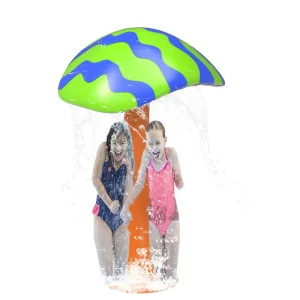
Optimal Solution: Compact themed splash pads, gentle toddler spiral slides, and elegant mushroom water umbrella fountains. Quiet hydraulic operations ensure serene guest relaxation areas are undisturbed.
2. Municipal & Public City Parks
Primary Objective: Free community engagement, high safety, zero drowning risk.
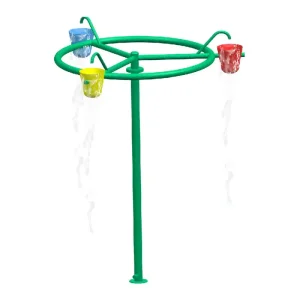
Optimal Solution: Zero-depth splash parks featuring flush-mount ground spray jets, interactive water cannons, arch sprays, and splash buckets with automated timer sequences to minimize daytime water use.
3. Commercial Shopping Malls & Retail Plazas
Primary Objective: Foot-traffic generation and experiential retail transformation.
Optimal Solution: Micro H2O play zones combining indoor dry play structures with low-splash fountain features, converting outdoor plaza underutilized real estate into family social spaces.
4. Commercial Water Parks & Mega Resorts
Primary Objective: High throughput capacity, extreme thrill rides, iconic visual presence.
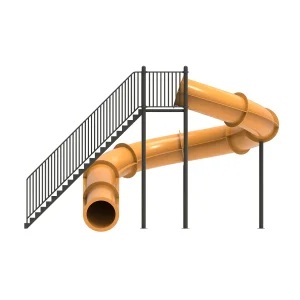
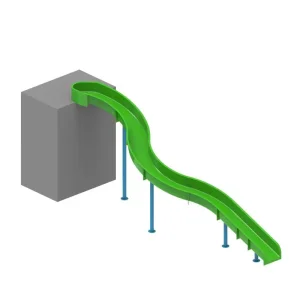
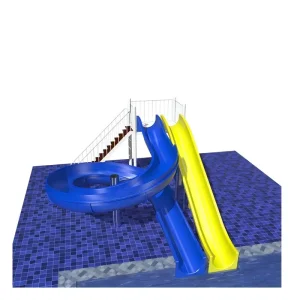
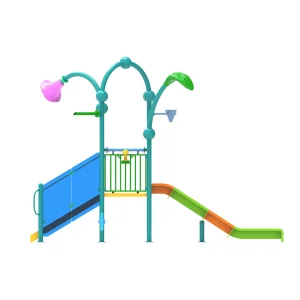
Optimal Solution: Multi-level interactive Water Houses with massive dump buckets, high-speed open/closed FRP tube slides, and multi-lane rainbow racer slides designed for hundreds of concurrent users.
High-Capacity Slides & Interactive Splash Equipment
Explore our export-ready OEM/ODM aquatic features engineered for commercial durability.
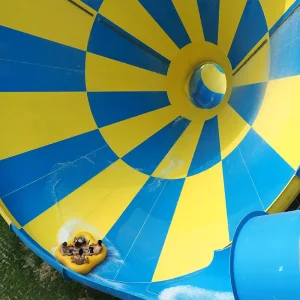
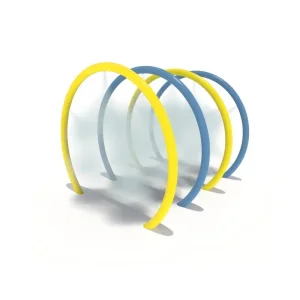
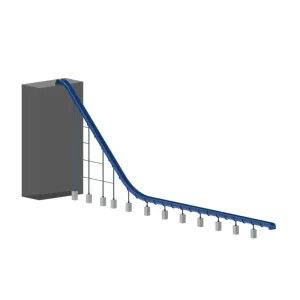
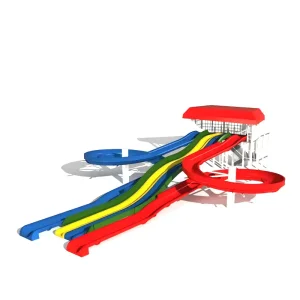
Hydro-Geometrical Physics, Anti-Slip Surfacing & Chemical Resilience
Critical engineering considerations ensuring user safety, minimal maintenance downtime, and operational efficiency.
1. Anti-Slip Wet-Deck Surfacing Protocols
In aquatic play zones, over 70% of injuries stem from slip-and-fall accidents rather than equipment failure. Premium OEM manufacturers integrate specialized surface treatments directly into fiberglass splash pads and water play decking. High-friction textured gel-coats, combined with padded non-porous EPDM rubber surfacing, maintain a high dynamic coefficient of friction (DCOF > 0.60) even under constant laminar water flow.
2. Gel-Coat Pigmentation & UV Stability
Outdoor water parks face extreme ultraviolet exposure and constant chlorine exposure, which cause rapid fading, chalking, and fiberglass degradation. Professional factories apply marine-grade Isophthalic Neopentyl Glycol (ISO/NPG) gel-coats at a precise wet thickness of 0.8mm to 1.0mm. This technical formulation guarantees high weatherability, preventing chemical blistering and keeping vibrant colors intact over 10+ years of intense sun exposure.
3. Hydraulic Balance and Smooth Flume Geometry
Water slide performance depends on balancing gravity against dynamic fluid friction. Flume transitions must feature variable radius curvature so riders do not experience sudden G-force spikes or wall impacts. Water delivery manifolds must maintain uniform nozzle pressures (1.5 to 2.5 bar) to ensure a consistent liquid film thickness along the entire length of the slide, preventing dry friction burn on rider skin.
Enterprise Buyer FAQ: OEM Manufacturing & Procurement
Expert answers from our engineering and export team regarding custom design, certifications, shipping, and installation.